Year-on-Year Inflation
94.8%
Accumulated inflation over the last 12 months reflects the sustained price increase that erodes the real value of the Argentine peso.

Data, infographics and clear explanations to understand how inflation and other factors affect your wallet.
View latest figures
Accumulated inflation over the last 12 months reflects the sustained price increase that erodes the real value of the Argentine peso.
Inflation-adjusted wages show a loss of purchasing power, especially in sectors with fixed incomes.
The monthly increase in the cost of food and basic services directly impacts the average family budget.
The relationship between the official exchange rate and real purchasing power determines the peso's international buying capacity.
What do these numbers really tell us about our everyday economy? Explore the temporal dynamics of key economic indicators and discover how these movements directly affect your purchasing capacity.
January 13, 2026
The most recent data shows a deceleration trend in the monthly inflation rate, although the accumulated impact on purchasing power continues to be significant. The gap between wage increases and price rises persists as the main challenge for Argentine households.
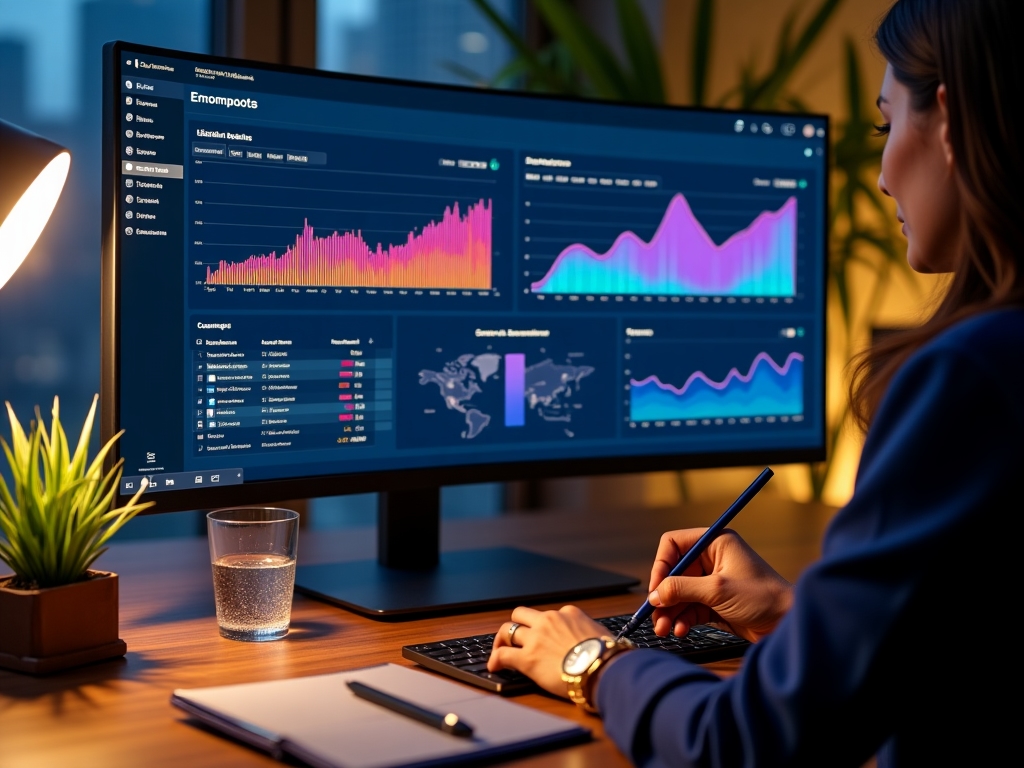
The peso's purchasing power is not an abstract concept: it represents your real ability to buy goods and services with your income. But what forces shape this capacity day by day?
Inflation is the most visible factor, gradually eroding the value of each peso in your pocket. However, the equation is more complex: the Central Bank's monetary policies, exchange rate evolution, market expectations and wage adjustments constantly interact.
Public utility rate increases, variations in tax pressure and changes in global consumption patterns also exert pressure. When the international price of commodities that Argentina exports fluctuates, this indirectly affects your local purchasing capacity.
Understanding these dynamics allows you to anticipate trends and make more informed financial decisions. The question is not whether these factors will affect your personal economy, but how you can strategically adapt to them.

Economic numbers can seem intimidating, but what if you could read them like a map guiding your financial decisions? Each index tells a story about the present and future of your personal economy.
The Consumer Price Index (CPI) measures the average price variation of a representative basket of goods and services. When you hear that monthly inflation is 8%, it means that, on average, you need 8% more money than the previous month to buy the same things. This percentage comprises disparate variations: food may rise 12%, while transportation increases 5%.
Real wage adjusts your nominal income for inflation, revealing your true purchasing power. A 6% wage increase with 8% inflation results in a real 2% drop in your purchasing capacity. The official versus parallel exchange rate signals pressures in the currency market that eventually impact domestic prices.
Mastering this reading transforms abstract numbers into practical tools for planning major purchases, negotiating wage increases or deciding the optimal timing for investments.

How do you protect your personal economy when the macroeconomic context is challenging? The answer lies in concrete strategies adapted to Argentine reality.
First, diversify your savings. Keeping everything in liquid pesos guarantees value loss. Consider inflation-adjusted instruments like CER bonds, UVA term deposits or mutual funds that replicate inflation indices. Small holdings in dollars (within the legal framework) can serve as partial hedging.
Second, optimize your consumption intelligently. Buy durable or non-perishable goods when you detect opportunities, taking advantage of bank promotions. Monitor your categorized expenses: knowing exactly how much you allocate to food, services and transportation allows you to identify adjustment areas without sacrificing quality of life.
Third, invest in your human capital. Updated skills and continuous education are the best hedge against economic uncertainty, increasing your income-generating capacity regardless of context. Finally, stay informed: understanding macroeconomic trends gives you temporal advantage to anticipate price movements.
How much do you really know about purchasing power and inflation? Answer these questions and discover areas where you can deepen your understanding.
We're here to answer your questions about the peso's purchasing power and how to interpret economic data that affects your daily life.